Rust solo base defense against 200 hunters shows how one builder survives an overwhelming raid
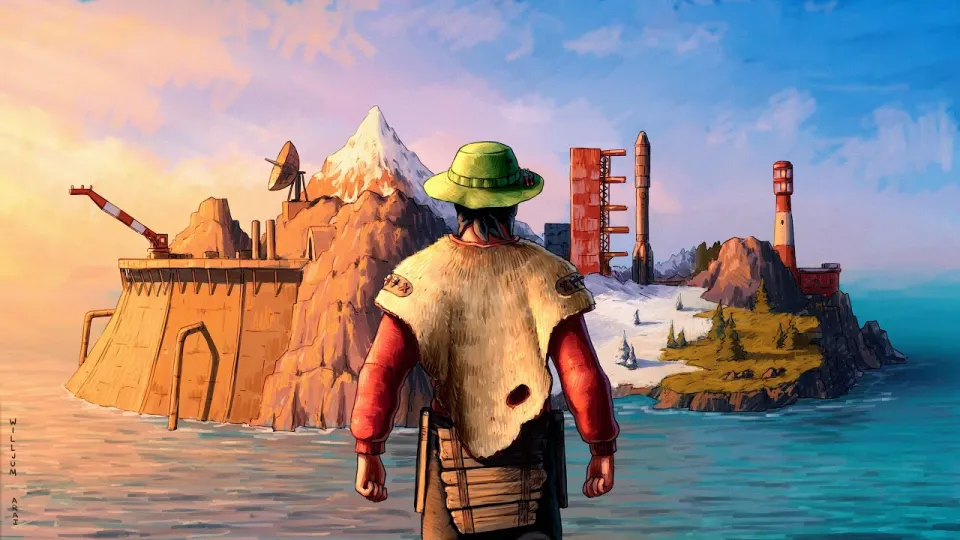
Video: When a Solo Rust builder Vs 200 Hunters...
Want articles like this for your own video to promote it on YouTube and Google? Order them through the Telegram bot @sat_sit_bot. Articles with your video embedded are written and posted by the bot itself — on popular topical sites (no ads). Your first 50 articles are free.
· based on the channel Willjum
Key takeaways
- Willjum's video pits one solo builder against a lobby of roughly 200 hunters hunting his base.
- The run is a custom event format, not a standard vanilla wipe, which changes how raids and respawns work.
- Survival hinges on base layering, spare kits and supply drops rather than on winning open fights.
- Viewers repeatedly asked for duo, trio and 24-hour-prep versions of the same challenge.
- Support for the channel runs through Patreon, where the creator funds hardware and production.
Rust is a survival game where a solo player builds, loots and defends a base against everyone else on the server, and the “200 hunters” format pushes that to its limit by turning the entire lobby into a hunting party. In Willjum's video, one builder works alone while a large group of players is tasked with finding and destroying everything he constructs. The result is less a firefight and more a test of preparation, layout and nerve.
If you want to follow the creator's work and support more experiments like this, the channel's main support page is Willjum's Patreon, where supporters fund new hardware and video production.
What the solo versus 200 hunters format actually is
The solo versus 200 hunters format is a custom event in Rust where one player builds and defends while a much larger group is pointed at his base. It is not a normal wipe: the numbers are deliberately lopsided, the hunters know roughly what they are looking for, and the builder cannot rely on allies, trade or a clan to bail him out.
That changes the math of Rust completely. In vanilla, a solo player survives by staying small, quiet and mobile, picking fights on his own terms and never holding ground he cannot afford to lose. Against hundreds of hunters, staying quiet stops working once the base is found, so the entire run becomes a race between how fast the base goes up and how fast the hunters organise.
Why base design decides the run before the first fight
Base design is the single biggest factor in a solo defense, because every wall, door and fake compartment buys time that a lone defender cannot buy with players. A builder facing a crowd is not trying to make the base unraidable; he is trying to make it expensive and slow.
- Layer the core so the cheapest path to loot runs through the most doors. Honeycomb and airlocks are not decoration when dozens of players are probing for a weak wall.
- Split loot across several small stashes instead of one large room. Hunters who break in and find nothing useful lose momentum and often leave.
- Build multiple small structures rather than one landmark. A huge compound is a beacon; several modest bases force the hunters to guess.
- Keep an exit that does not lead through the main entrance, so the builder can leave with gear when the raid starts.
- Use the terrain. Rocks, cliffs and water choke points matter more than extra sheet metal when the attacking group is large.
Willjum's approach in the video leans on the same logic: build fast, hide the good stuff, and treat the visible base as bait rather than as a home.
Gear, rope and supply runs in a one-man economy
Gear and rope logistics are the second pillar of a solo run, because a lone builder has no clan furnace and no teammate crafting while he defends. Every kit he loses is a kit he has to farm again from scratch, and against a large hunting party he will lose several.
That is why supply runs matter more than kills. A solo player who keeps a spare kit, a stack of healing items and enough materials to repair doors can absorb a failed defense and keep going. A solo player who spends everything on one heroic stand is finished the moment the door breaks. In practice this means:
- crafting in batches and storing finished kits away from the main base;
- keeping a small forward stash near the fighting so a respawn is not a five-minute walk;
- prioritising tools and building materials over weapons early, since a defender who cannot repair loses anyway;
- accepting that some fights are unwinnable and simply leaving with the loot.
How the challenge plays out against a full lobby
Surviving a full lobby comes down to tempo: the builder wins as long as the hunters are disorganised and loses once they coordinate. A crowd of that size has no shortage of rockets, but it does have a shortage of patience, and most large groups fracture into smaller squads that arrive at different times.
The builder's job is to make those arrivals as costly as possible. Fighting from inside a base, using doors as chokes, retreating to a second layer and repairing behind cover all convert a numbers disadvantage into a series of small, manageable fights. The moment the defender steps outside to trade shots in the open, the numbers take over.
Willjum's run also shows the value of information: knowing which side of the base is being hit, how many are there and whether a second group is already on the way. A solo player who scouts his own surroundings and hears the raid coming gets to choose where the fight happens.
Common questions solo players ask about this kind of raid
Solo players watching this format tend to ask the same practical questions, and the answers come down to preparation rather than mechanical skill.
- Is a big base or a small base better? Small and layered beats large and obvious. The goal is to make the raid expensive, not impressive.
- Should a solo player fight or hide? Fight only where the base gives an advantage; otherwise let the loot sit in a stash and rebuild.
- How much prep is enough? Enough to lose two full kits and still have a third ready, plus materials to repair doors after the first wave.
- What kills solo runs fastest? Running out of materials mid-raid and having to farm while the base is being broken into.
Viewers of the original video pushed hard for variations of the same idea, including a duo version with another well-known creator, a 24-hour preparation window before the hunters arrive, and a longer uncut version of the run. All three point at the same truth: the interesting part of Rust solo survival is not the shooting, it is the planning that happens before anyone fires a rocket.
Useful links
- Willjum on Patreon — support the channel and its hardware upgrades
- https://www.twitch.tv/willjum
- https://twitter.com/willjum1
- http://creativecommons.org/licenses/by/4.0/
What this Rust experiment proves about solo survival
The solo versus 200 hunters run is a useful stress test for anyone who plays Rust alone, because it strips away the things solos usually rely on and leaves only base design, logistics and decision-making. Willjum's video makes the case that a single builder survives not by outgunning a crowd but by making every step toward his loot cost more than the crowd is willing to pay. The same principles scale down to a normal vanilla wipe: layer the base, split the loot, keep spare kits, and never fight where the numbers can reach you. If you want more of these experiments, the creator behind the run is Willjum, and supporting the channel through Patreon is the direct way to help fund the next one.
Source: When a Solo Rust builder Vs 200 Hunters... · Markdown version
Questions & answers
What is the solo versus 200 hunters challenge in Rust?
It is a custom event format where one player builds and defends a base while a very large group of other players is tasked with hunting him down. The numbers are deliberately unfair, and the builder has no teammates, trade partners or clan support. It is meant as a stress test of base design and preparation rather than a balanced fight.
Can a solo player actually survive a raid by that many people?
Not by winning fights in the open. Survival comes from layered base design, hidden loot, spare kits and repair materials, which force the attackers to spend time and resources for little reward. The defender's goal is to make the raid expensive and slow, not to defeat everyone.
Why do viewers want a duo or trio version of this run?
Because a second player changes the logistics completely: someone can craft, repair and scout while the other defends. Viewers also suggested a 24-hour preparation window, which would let the builder stockpile far more materials before the hunters arrive.
Where can I support the creator behind this Rust video?
The channel's main support page is Patreon at https://www.patreon.com/Willjum, which funds hardware and video production. The creator also streams on Twitch at https://www.twitch.tv/willjum and posts updates on Twitter at https://twitter.com/willjum1.